
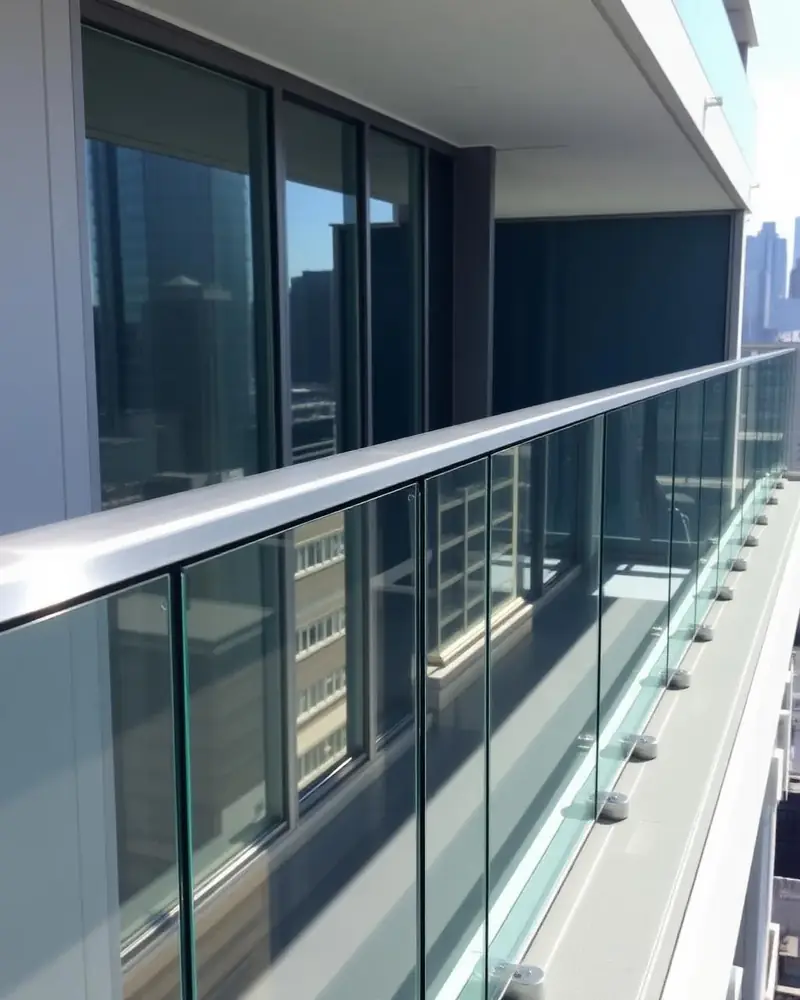
Picking between a frameless and a framed glass railing for a backyard deck is the most common decision Glass Railing Experts helps GTA homeowners work through. Both systems use the same CSA-tempered safety glass, both meet the Ontario Building Code, both will outlast a wood-picket railing by 20+ years — but they behave very differently in aesthetics, durability under load, wind performance, maintenance overhead, and total cost of ownership over a 25-year horizon.
Here is the technical comparison. Read it once and you'll never have to second-guess a quote.
How Each System Is Built
Frameless
Frameless systems anchor the glass directly into the deck substrate using a continuous stainless or aluminum base shoe (or, less commonly, isolated spigots). There is no top rail, no vertical post, and no horizontal cross-member. The glass is the structural element, which is why frameless panels are typically thicker — 13.52 mm to 21.52 mm laminated tempered.
Framed
Framed systems wrap the glass inside an aluminum or stainless top rail, vertical posts at 1.0–1.8 m on centre, and a bottom channel. The glass panels are typically 10 mm or 12 mm tempered, and the frame carries the structural load. Posts are mechanically anchored into the deck substructure, blocking, or rim joist as required by code.
Aesthetics
Frameless wins on pure visual cleanliness. There is no horizontal interruption to the view, and from inside the home looking out, the deck and the yard read as a single space. This is why frameless dominates premium waterfront installs in Oakville, Burlington, and Mississauga.
Framed systems have closed the visual gap dramatically with slim-profile aluminum extrusions in matte black or anodized finishes. From 10 feet away, a quality slim-profile framed system reads as 'clean modern glass railing' to almost everyone except a designer. Framed systems also come in colour-matched-to-trim options that frameless cannot replicate.
Verdict: frameless for view-driven projects, framed for design-system-driven projects.
Durability
Both systems are designed for 25+ year service life, but they wear differently.
Frameless Wear Profile
The two failure modes are silicone bead degradation in wet-glaze base shoes (5–7 year inspection interval) and gasket wear in dry-glaze systems (8–10 year inspection interval). The glass itself is essentially indestructible barring impact damage. Hardware is corrosion-resistant by spec.
Framed Wear Profile
Framed systems have more components, which means more parts to inspect. Powder-coat top-rail finish degrades under UV at roughly 1–2% per year — a 20-year-old top rail will look noticeably duller than the day it was installed unless re-finished. Post-base anchors should be re-torqued at the 5-year mark, especially on wood-deck installs where the substrate moves with humidity.
Verdict: frameless requires fewer touch-points but each one is more involved. Framed requires more frequent but simpler maintenance.
Wind Resistance
This matters more in the GTA than most installers will tell you. Lake-effect wind on south-facing decks in Scarborough, Ajax, and Pickering routinely hits 90 km/h in spring and fall. Rooftop terraces in downtown Toronto see even higher gusts off the lake corridor.
Frameless Under Wind Load
Frameless systems behave like a solid wall under wind load. The full surface area of every panel translates directly into base-shoe load. This is why frameless installs in exposed locations require thicker glass (typically 17.52 mm laminated tempered) and a heavier base shoe — and why the engineered drawings matter. A correctly engineered frameless system handles 100+ km/h gusts without issue. An under-spec'd one will deflect visibly and stress the base shoe.
Framed Under Wind Load
Framed systems distribute wind load across the post grid, which means thinner glass and lower base loads at any single anchor point. Framed is generally the safer default for ultra-exposed waterfront decks where load engineering is uncertain.
Verdict: frameless wins on aesthetics in exposed locations but only when correctly engineered. Framed is the lower-risk default for high-wind exposure.
Cost of Ownership Over 25 Years
Frameless typically costs 30–45% more to install. Over 25 years, the maintenance cost gap closes — frameless systems have lower service-call frequency. Total 25-year cost of ownership is typically 15–25% higher for frameless than for a comparable-quality framed system. The difference is usually worth it on view-driven projects and almost never worth it on enclosed or interior-facing decks.
Which One Is Right for Your Deck?
Choose Frameless If
Your deck has a view worth protecting (lake, ravine, downtown skyline). Your home has a modern or contemporary architectural language. You're willing to invest 30–45% more upfront for a noticeably cleaner sightline.
Choose Framed If
Your deck faces other houses or a fence. Your home has a traditional or transitional architectural language. You want the cleanest cost-per-linear-foot without sacrificing the modern glass look. You live in an ultra-exposed wind location and want maximum engineering margin.
Free Quote on Either System
Glass Railing Experts installs both frameless and framed glass deck railings across all 20 GTA cities — and we'll give you straight advice on which system makes sense for your specific deck. Call 647-474-4751 today for a free, fixed-price quote. Every install includes engineered shop drawings, OBC-compliant fastening, and a written workmanship warranty.
Ready to start your project?
Get a free, fixed-price quote across the GTA.